
Category

Industry

Category

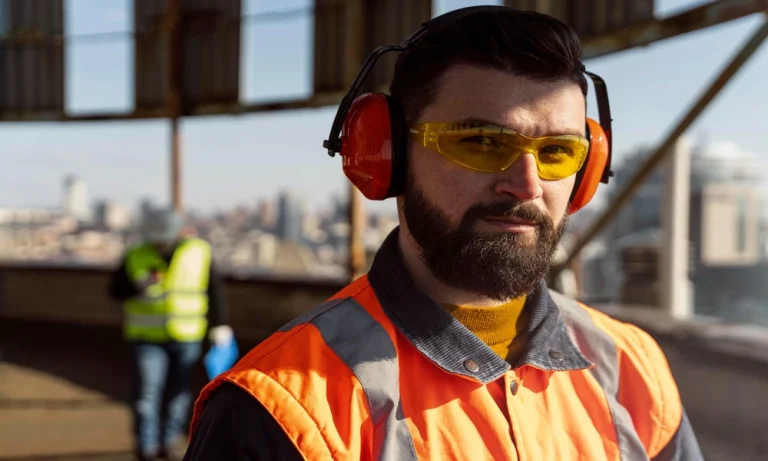
Earplugs remain the default on most sites because they’re cheap, compact, and easy to distribute in bulk. For much of the work on a typical project, that’s a reasonable choice. The problem arises when site conditions shift, whether through a change in machinery, a move to enclosed work, or simply a crew working longer hours near a sustained noise source, and the protection standard doesn’t shift with them. Safety officers reviewing their current provision should watch for five specific signs that earplugs have stopped being adequate for the exposure their crew actually faces.

1. Measured Noise Levels Sit Consistently Above What Earplugs Can Attenuate

Every hearing protector carries a rated attenuation figure, and earplugs generally provide less reduction than well-fitted over-ear protection. Where a sound level meter records sustained levels that, minus the earplugs’ rated attenuation, still leave workers above the permissible exposure limit, the arithmetic alone indicates a need to move to higher-attenuation ear muffs in Singapore rather than continuing with the current provision and hoping fit compensates for the shortfall.

2. Workers Report Ringing or Muffled Hearing After Shifts

Tinnitus or temporary hearing dullness at the end of a shift indicates exposure is reaching the inner ear despite protection being worn. This is a direct, practical signal that the current provision isn’t performing as intended on that site, whether because of insufficient attenuation, poor fit, or inconsistent use. It’s worth treating this feedback as data rather than as a complaint, since workers notice this well before any audiometric test would flag it.

3. Inconsistent Fit Is Undermining Protection in Practice

Earplugs only deliver their rated attenuation when inserted correctly, and correct insertion is harder to achieve and verify than most safety briefings assume. On a large crew with varied training and turnover, a meaningful proportion of plugs are likely to be poorly seated at any given time. Ear muffs offer a more forgiving, visually verifiable fit, which matters considerably for a supervisor trying to confirm compliance across a site without inspecting each worker individually.

4. Work Involves Frequent Removal and Reinsertion of Protection

Tasks requiring workers to move repeatedly between noisy and quiet zones, or to communicate frequently, create a pattern where plugs are pulled out and pushed back in throughout a shift. Each reinsertion risks a poor seal, and in practice many workers stop bothering. Over-ear protection can be lifted and reseated in seconds without the same fit penalty, making it far better suited to this working pattern.

5. Enclosed or Reflective Work Environments Are Amplifying Exposure

Working inside partially completed structures, basements, or tunnels raises effective noise levels through reflection in ways that open-air measurements don’t capture. Hearing protection in Singapore selected on the basis of an open-site assessment can fall short once the same machinery operates within a confined, hard-surfaced space, which makes re-measuring in the actual enclosed conditions an important step before assuming existing provision still suffices.

Key Signs Worth Watching For

  • Measured levels exceeding limits even after subtracting earplug attenuation
  • Workers reporting ringing or muffled hearing at the end of shifts
  • Widespread poor insertion that’s difficult to verify across a crew
  • Work patterns requiring frequent removal and reinsertion of protection
  • Enclosed or reflective spaces raising effective exposure above site assessments

Reassessing Provision Against Current Site Conditions

Hearing damage accumulates without producing an obvious moment of injury, which is precisely why provision tends to lag behind actual exposure on sites where conditions have evolved since the original assessment. Where two or more of these signs are present, a fresh noise assessment against current machinery and working conditions is generally the right next step, followed by matching protection to the exposure that assessment actually records rather than to what was adequate when the project began.

Contact Ansac Technology to review your site’s noise exposure levels and identify the appropriate grade of ear muffs for your crew.
Key Takeaways

  • A case erector automates carton forming to improve packaging efficiency.
  • Food and beverage manufacturers use automated carton erection to support high production volumes.
  • Consistent carton formation improves product protection and supply chain performance.
  • Automation reduces manual labour while supporting hygiene and operational consistency.
  • Integrating a case erector with other packaging equipment creates a more efficient production line.

Introduction

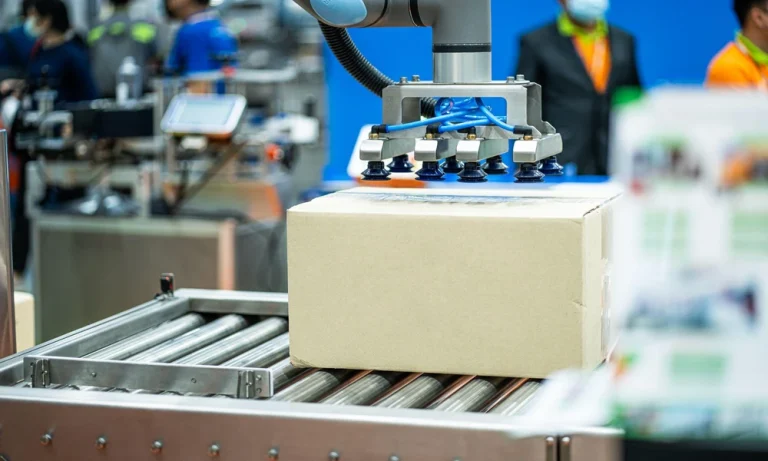
The food and beverage industry relies on efficient packaging to keep production moving and products protected during storage and transport. Manual carton assembly can slow operations, particularly in facilities handling large production volumes. A case erector automates the process by opening flat cartons, forming them into shape, and sealing the base before they move to the filling stage. This allows manufacturers to maintain a steady packaging flow while reducing labour requirements and improving consistency. As production demands continue to increase, automated case erection has become a practical solution for many food and beverage packaging lines.

Supporting High-Volume Packaging Operations

Food and beverage manufacturers often package thousands of products every shift. Relying on manual carton assembly can create delays and increase labour costs. A case erector forms cartons automatically at a consistent speed, allowing products to move efficiently through the packaging line. Because cartons are always ready for loading, downstream equipment such as filling systems and case sealers can operate continuously. This reduces production bottlenecks and helps manufacturers achieve planned output without unnecessary interruptions. Faster and more reliable carton preparation also allows facilities to respond more effectively to changing production schedules.

Improving Packaging Quality and Product Protection

Properly formed cartons are essential for protecting products during handling, warehousing, and transportation. Poorly assembled cases may collapse, open during transit, or create stacking problems on pallets. Automated case erection produces cartons with consistent dimensions and reliable bottom sealing, reducing the likelihood of packaging failures. Uniform cartons also improve pallet stability and make automated handling systems operate more efficiently. For food and beverage manufacturers, maintaining consistent packaging quality helps reduce product damage, minimise waste, and support smooth distribution throughout the supply chain.

Supporting Hygiene and Efficient Workflows

Although cartons are secondary packaging, reducing unnecessary manual handling contributes to cleaner production processes. A case erector minimises operator contact with packaging materials by automating carton formation. Employees can instead focus on machine monitoring, quality inspections, and other operational tasks. Automation also creates a more predictable workflow by reducing variations associated with manual carton assembly. With fewer interruptions and consistent machine performance, manufacturers can improve production efficiency while maintaining packaging standards required in food processing environments.

ALSO READ: A Guide to Enhancing Supply Chain Management and Logistics

Flexible Applications Across Product Categories

Food and beverage manufacturers package a wide variety of products, including bottled beverages, canned goods, frozen foods, dairy products, snacks, sauces, and dry ingredients. Many case erectors are designed to accommodate different carton sizes with quick adjustments or automated changeovers. This flexibility allows manufacturers to switch between production runs with minimal downtime, making the equipment suitable for businesses producing multiple product lines. The ability to handle changing packaging requirements helps improve equipment utilisation while supporting efficient day-to-day operations.

Integrating with Automated Packaging Systems

A case erector delivers greater value when integrated with other packaging equipment. Once cartons are formed, they move directly to filling, sealing, labelling, and palletising systems without requiring manual handling. This continuous process improves production flow, reduces delays, and allows manufacturers to monitor packaging performance more effectively. Integrated automation also helps identify bottlenecks and improve line efficiency, enabling businesses to optimise output while reducing operating costs.

Conclusion

A case erector plays an important role in modern food and beverage packaging by automating carton formation, improving consistency, and supporting efficient production. It reduces manual labour, enhances packaging quality, and integrates smoothly with automated packaging lines. As manufacturers continue to increase production capacity and improve operational efficiency, automated case erection remains a practical investment for reliable, high-volume packaging operations.

Connect with Sunstream Industries and improve your packaging efficiency with a reliable case erector designed to support high-volume food and beverage production.