
Key Takeaways
- A case erector automates carton forming to improve packaging efficiency.
- Food and beverage manufacturers use automated carton erection to support high production volumes.
- Consistent carton formation improves product protection and supply chain performance.
- Automation reduces manual labour while supporting hygiene and operational consistency.
- Integrating a case erector with other packaging equipment creates a more efficient production line.
Introduction
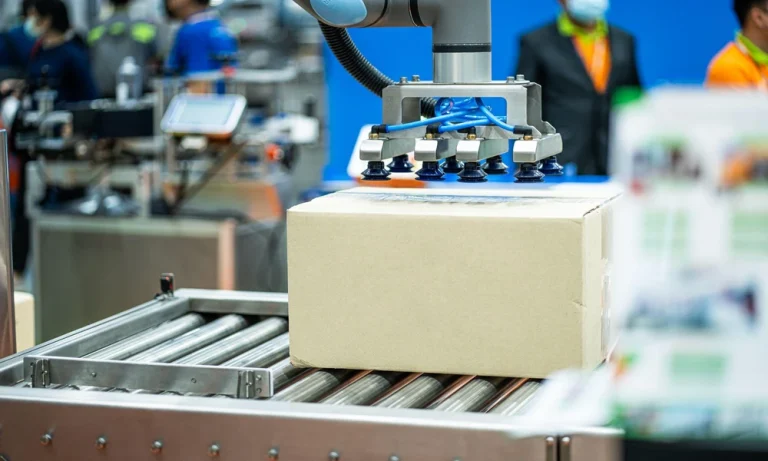
The food and beverage industry relies on efficient packaging to keep production moving and products protected during storage and transport. Manual carton assembly can slow operations, particularly in facilities handling large production volumes. A case erector automates the process by opening flat cartons, forming them into shape, and sealing the base before they move to the filling stage. This allows manufacturers to maintain a steady packaging flow while reducing labour requirements and improving consistency. As production demands continue to increase, automated case erection has become a practical solution for many food and beverage packaging lines.
Supporting High-Volume Packaging Operations
Food and beverage manufacturers often package thousands of products every shift. Relying on manual carton assembly can create delays and increase labour costs. A case erector forms cartons automatically at a consistent speed, allowing products to move efficiently through the packaging line. Because cartons are always ready for loading, downstream equipment such as filling systems and case sealers can operate continuously. This reduces production bottlenecks and helps manufacturers achieve planned output without unnecessary interruptions. Faster and more reliable carton preparation also allows facilities to respond more effectively to changing production schedules.
Improving Packaging Quality and Product Protection
Properly formed cartons are essential for protecting products during handling, warehousing, and transportation. Poorly assembled cases may collapse, open during transit, or create stacking problems on pallets. Automated case erection produces cartons with consistent dimensions and reliable bottom sealing, reducing the likelihood of packaging failures. Uniform cartons also improve pallet stability and make automated handling systems operate more efficiently. For food and beverage manufacturers, maintaining consistent packaging quality helps reduce product damage, minimise waste, and support smooth distribution throughout the supply chain.
Supporting Hygiene and Efficient Workflows
Although cartons are secondary packaging, reducing unnecessary manual handling contributes to cleaner production processes. A case erector minimises operator contact with packaging materials by automating carton formation. Employees can instead focus on machine monitoring, quality inspections, and other operational tasks. Automation also creates a more predictable workflow by reducing variations associated with manual carton assembly. With fewer interruptions and consistent machine performance, manufacturers can improve production efficiency while maintaining packaging standards required in food processing environments.
ALSO READ: A Guide to Enhancing Supply Chain Management and Logistics
Flexible Applications Across Product Categories
Food and beverage manufacturers package a wide variety of products, including bottled beverages, canned goods, frozen foods, dairy products, snacks, sauces, and dry ingredients. Many case erectors are designed to accommodate different carton sizes with quick adjustments or automated changeovers. This flexibility allows manufacturers to switch between production runs with minimal downtime, making the equipment suitable for businesses producing multiple product lines. The ability to handle changing packaging requirements helps improve equipment utilisation while supporting efficient day-to-day operations.
Integrating with Automated Packaging Systems
A case erector delivers greater value when integrated with other packaging equipment. Once cartons are formed, they move directly to filling, sealing, labelling, and palletising systems without requiring manual handling. This continuous process improves production flow, reduces delays, and allows manufacturers to monitor packaging performance more effectively. Integrated automation also helps identify bottlenecks and improve line efficiency, enabling businesses to optimise output while reducing operating costs.
Conclusion
A case erector plays an important role in modern food and beverage packaging by automating carton formation, improving consistency, and supporting efficient production. It reduces manual labour, enhances packaging quality, and integrates smoothly with automated packaging lines. As manufacturers continue to increase production capacity and improve operational efficiency, automated case erection remains a practical investment for reliable, high-volume packaging operations.
Connect with Sunstream Industries and improve your packaging efficiency with a reliable case erector designed to support high-volume food and beverage production.